Part 1 of a Two-Part Series on Professional Development in the Private Investigation Industry
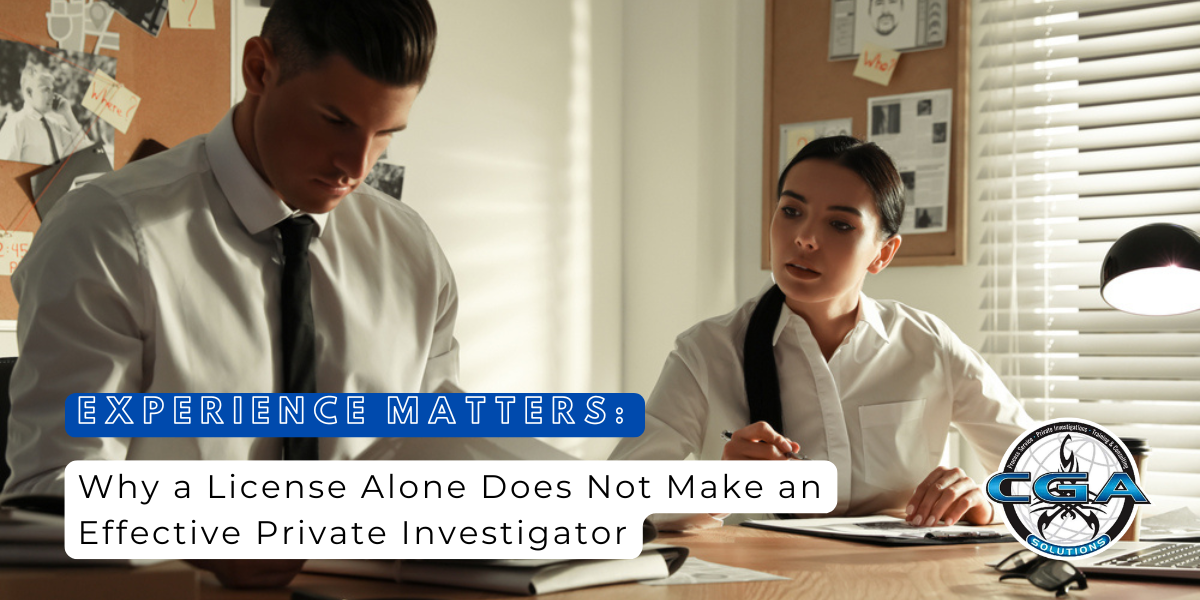
The private investigation profession is more accessible than ever. In many states, individuals can complete the licensing process, pass the required examination, meet regulatory standards, and legally market themselves as professional investigators. While licensing serves an important purpose, it is only the beginning of an investigator’s education—not the culmination of it.
Why Licensing Alone Is Not Enough
With more than twenty-six years of experience as a licensed private investigator (preceded by eleven years in law enforcement), I have worked cases ranging from routine locates and witness interviews to complex capital defense investigations involving serial offenders. Throughout my career, I have seen one recurring problem that continues to impact our profession: individuals enter the field with little or no investigative background and mistakenly believe a license alone makes them competent investigators.
The reality is that private investigation is not a profession that can be mastered through a test. A state examination may demonstrate a basic understanding of laws and regulations, but it cannot teach judgment, investigative strategy, analytical thinking, case development, or the ability to adapt when an investigation takes an unexpected turn.
Furthermore, many newly licensed investigators enter the industry from occupations that are not investigative in nature. Some have experience in security, corrections, military service, sales, or other professions that may provide valuable life skills, but those experiences do not necessarily translate into the ability to conduct complex investigations. As a result, these investigators often accept cases that exceed their capabilities.
The consequences are predictable when an inexperienced investigator accepts an assignment, gathers a few initial facts, and quickly becomes overwhelmed. They do not know how to identify investigative leads, establish a logical case plan, prioritize objectives, or determine what records and sources should be examined. Hours are spent pursuing irrelevant information while critical evidence remains undiscovered. Eventually, the case stalls, the client becomes frustrated, and opportunities are lost.
How Experience Shapes an Effective Investigation
The problem is rarely a lack of effort. More often, it is the absence of a strong foundation in investigative work. Every investigation begins with a central question: What am I trying to prove, disprove, locate, identify, or understand? From there, an experienced investigator develops a methodology designed to answer that question. Investigations are rarely solved by luck. They are solved through process, discipline, and experience.
Whether conducting legal due diligence, corporate investigations, asset investigations, witness locates, litigation support, background investigations, or criminal defense investigations, the first step is developing a strategic roadmap. Experienced investigators understand how to evaluate available information, identify gaps, establish priorities, and determine the most effective path forward. They know when to pursue a lead, when to abandon one, and when a case requires specialized expertise.
One of the most valuable skills an investigator can possess is recognizing the limits of their own knowledge. No investigator is an expert in every discipline. The best investigators understand when to collaborate with specialists, consult subject-matter experts, or bring in additional resources. There is no weakness in asking for assistance. In fact, doing so often demonstrates professionalism and commitment to achieving the best outcome for the client.
What Clients Should Look for in a Private Investigator
Clients seeking investigative services should understand that experience matters. When evaluating a private investigator, they should look beyond the existence of a license and consider the investigator’s actual background.
- How many years have they conducted investigations?
- What types of cases have they handled?
- Have they worked on complex litigation matters?
- Have they testified in court?
- Have they managed large-scale investigations involving multiple sources of information?
These questions often reveal far more about an investigator’s capabilities than a license hanging on the wall.
The private investigation profession plays a critical role in our legal system, business community, and society as a whole. Private investigation is a profession defined by experience, sound judgment, and the ability to solve complex problems when others cannot. Licensing is essential, but true competence is developed through years of practical application, continuous learning, and firsthand exposure to real-world investigations.
For those entering the profession, there is nothing wrong with being new. Every experienced investigator started somewhere. The key is to remain humble, seek mentorship, pursue education opportunities, and avoid taking on assignments beyond your current capabilities.
For clients, the lesson is equally important: when the outcome of a case matters, choose experience over credentials alone. A license grants the authority to conduct investigations. Experience determines whether those investigations are conducted successfully.
By J. Alexander Chilton, a Licensed Private Investigator with 26+ Years of Investigative Experience